
One of the biggest advantages you can give yourself as a buyer right now is surprisingly simple: a flexible wish list.
Think of your wish list and your budget like the guardrails of your home search. When your budget needs to stay firm (and for most people, it does), the easiest lever you can pull is how tightly you hold onto every “want.” And honestly? A small compromise can be the difference between feeling stuck and getting the keys to your next home.
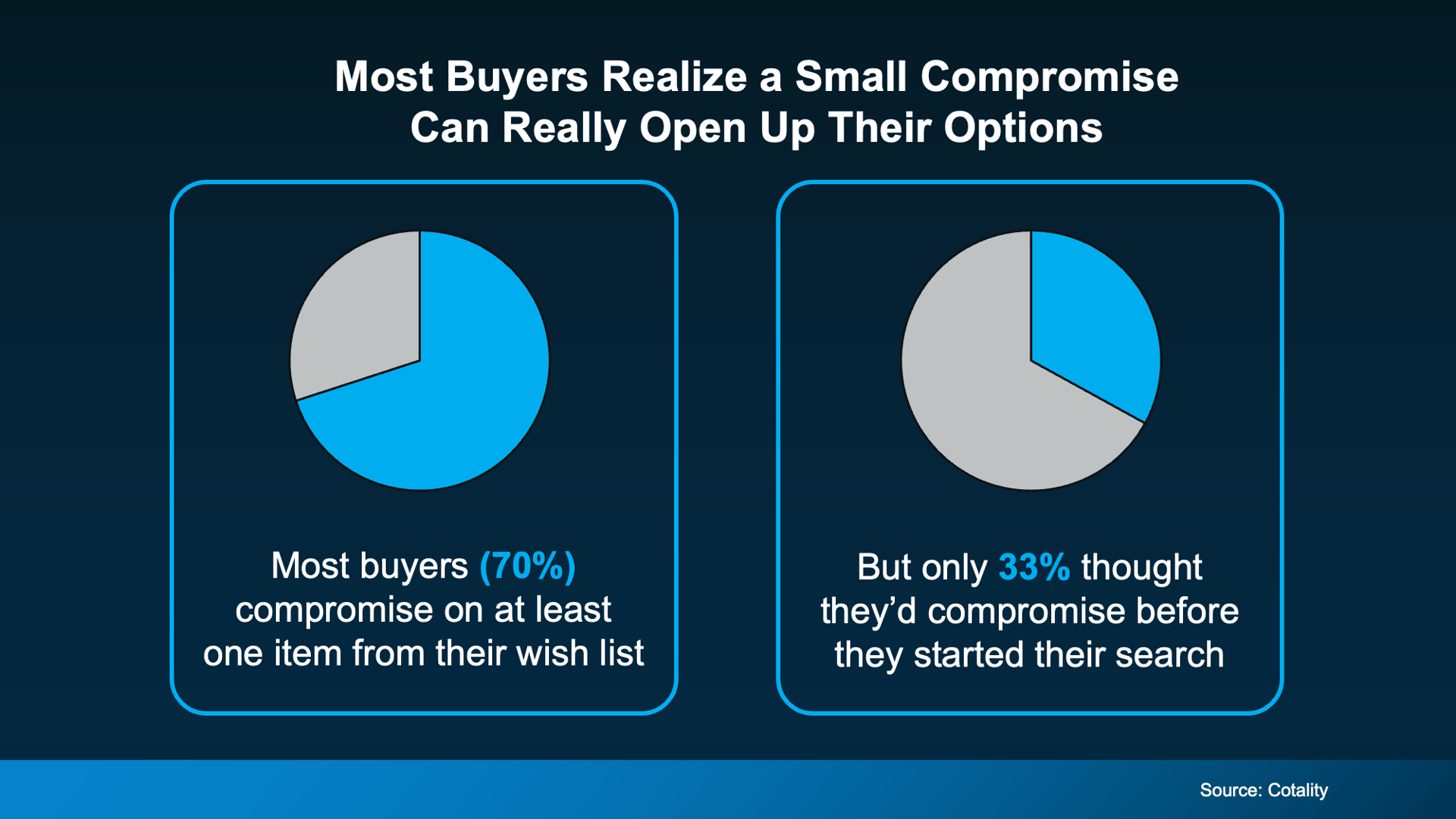
Here’s the good news: you’re not the only one doing this. A recent study from Cotality found that most buyers (70%) ended up compromising on at least one item from their original wish list. What’s interesting is that before they started searching, only 33% expected they’d have to compromise at all.
So what changes once you’re actually in the search? Real life starts to sharpen the picture. Buyers begin to realize that the things you can’t change matter way more than the things you can update later.
Because the truth is, you can absolutely change the cosmetic stuff over time. Floors can be refinished. Countertops can be swapped. Bathrooms can be updated. Paint is paint. But you can’t easily add land. You can’t magically fix a layout that doesn’t work for your daily life. And you definitely can’t pick up a house and move it closer to the people you love, the commute you need, or the town that fits your lifestyle.
That’s why I always say: focus on the “bones” first. Location, layout, lot size, and overall feel matter more than whether the kitchen is your dream kitchen on day one. When you start shopping that way, everything opens up — and that shift is power.
If you’re hitting a wall in your search, or you keep scrolling online thinking, “Why isn’t anything working?”, try this simple exercise. Write down everything you want in a home, then sort it into three buckets.
Start with your must-haves — the true non-negotiables that make daily life work. Think bedroom count, commute, accessibility, safety, or being close to family and support. Then create your nice-to-haves — the things you’d love, but you don’t truly need in order to live well. And finally, your dream features — the “one day” extras that would be amazing, but aren’t required for this move to be a good one.
Once you do that, you’ll usually notice something pretty fast: a lot of buyers accidentally treat nice-to-haves like must-haves. And when that happens, the search feels way smaller than it needs to be. Loosen just one or two of those “nice” items, and suddenly more homes come into range — including homes you may have scrolled right past that could actually work beautifully.
And here’s the part people don’t like to hear, but end up loving later: your next home doesn’t need to check every box. It just needs to check the right ones.
Maybe that means considering a home that needs light cosmetic updates. Maybe it means trading a little yard space for a better location. Those aren’t sacrifices. They’re smart trade-offs that help you move forward, build equity, and create your dream over time — instead of waiting for a unicorn listing that may never show up.
Bottom line: If you’re ready to find a home that fits your budget and your life, let’s take a look at your wish list together. A little flexibility can open up a lot more opportunity — and I’ll help you see it.