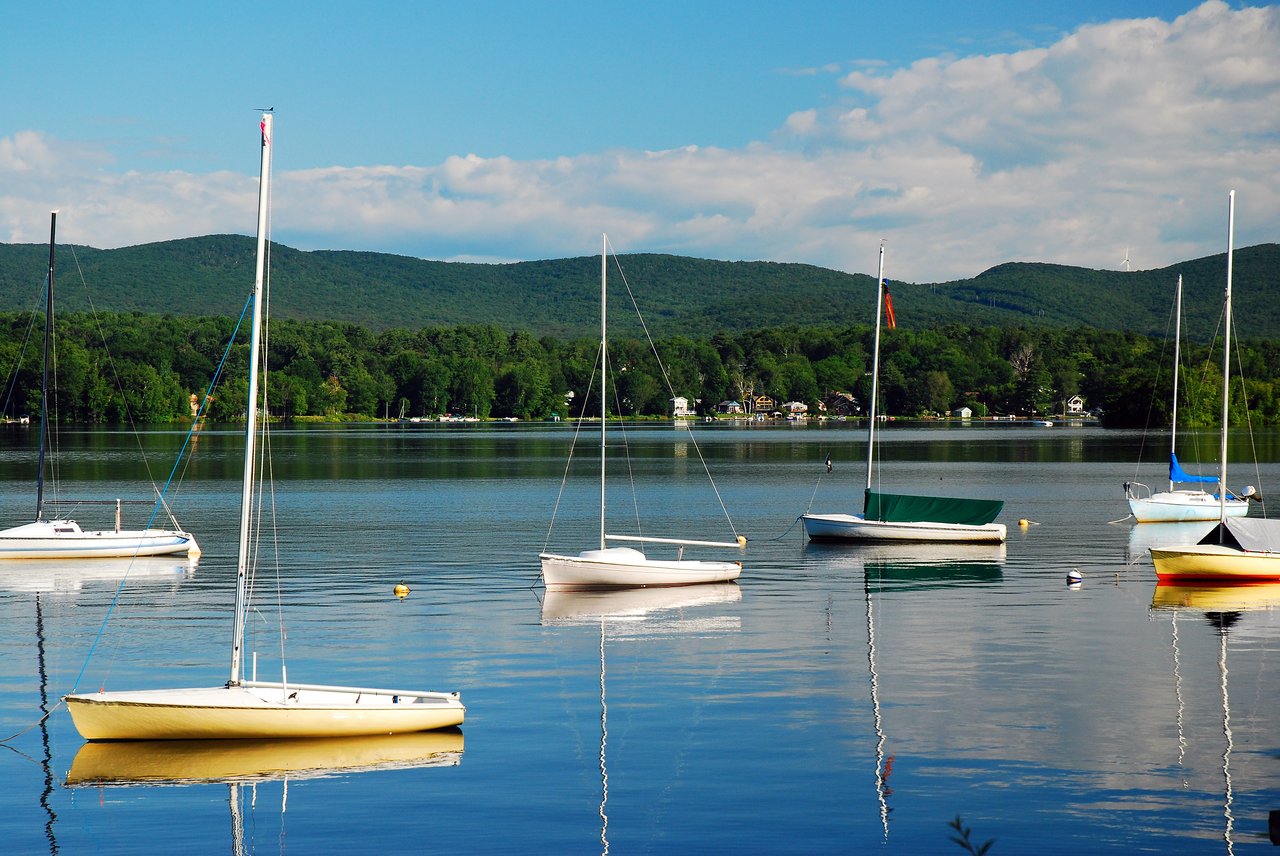
Walk into any conversation about a Walpole weekend and you'll hear the same two nouns inside of a minute: Adams Farm and Bird Park. People use them almost interchangeably, as if "the town has some nice green space" were the whole story. It isn't. Spend an actual Saturday and Sunday moving between the two and you'll notice something the map doesn't show: these are not two versions of the same thing. They are opposite answers to the same question of what a weekend is for, and the town's own event calendar has been quietly proving it all along.
The market that sets the tone before anything else opens
Most Saturdays this fall start the same way for a good share of the town: the farmers market at Spring Brook Park, 938 East Street, running 9am to 1pm every Saturday through October 17. It is entirely volunteer-run, which matters more than it sounds. A market that depends on paid staff eventually gets trimmed when budgets tighten. One that runs on volunteers keeps going because the people showing up to sell also live here, and the people showing up to shop are the same faces most weeks. Local farmers, bakers, and makers set up with live entertainment threaded through the morning, and leashed dogs are as welcome as the kids trailing a parent's cart.
That Saturday morning ritual is the town's low gear. Nobody's racing anything. You're picking up produce, catching up with a neighbor, maybe sticking around for the music. It sets a baseline of slowness before the rest of the weekend splits into its two directions.
Adams Farm is built to be used, not preserved
Adams Farm is the loud half of the equation, and its size tells you why. The property runs to more than 700 acres once you count the roughly 365 acres the town purchased outright through a 1997 override, plus the adjoining land tied in through agreements with the New England Forestry Foundation and Norfolk County Agricultural High School. That combination gives Walpole something few towns this size have: over 10 miles of marked trail that a rider can string into a 6 to 9 mile loop without repeating a foot of ground, and a network that connects onward to Rocky Woods and, from there, to Noanet Woodlands and Hale Reservation for anyone who wants to keep going.
The trails at Adams Farm are managed, not just mowed once a season and left alone. They close entirely to mountain bikes every March and April to protect the surface during mud season. That is not a park being precious about its grass. That is a working trail system being maintained like an asset, which is exactly how the fall calendar treats it. The Adams Farm Gardeners have an event on August 30. The Norfolk Hunt Club is out there September 12. A trail race with a beer garden follows later that month, and the New England Mountain Bike Association brings its SEMass MembaFest to the property on September 26. That is four organized uses in five weeks on one piece of conservation land, which only happens when a property is built for volume.
Bird Park was designed to slow you down on purpose
Now go five minutes down the road to Francis William Bird Park in East Walpole and the whole register changes. This is a much smaller property, 89 acres against Adams Farm's 700-plus, and it was never meant to absorb a race calendar. Charles Sumner Bird Sr. and his wife Anna created and endowed it in 1925 in memory of their son Francis William Bird, and they hired John Nolen, a landscape architect who trained under Frederick Law Olmsted, to design it. That lineage shows up in the choices Nolen made: more than three miles of walking paths that wind rather than cut straight, streams crossed by old granite bridges instead of culverts, open meadows deliberately left unmowed in places, frog ponds instead of a single ornamental pool. None of that reads as an accident once you know an Olmsted-trained designer built it to slow a visitor's pace on purpose.
The park still enforces that intention today. It closes at sunset, full stop, and portrait photography sessions require a permit purchased through Trustees membership, a detail that only makes sense for a property trying to protect a specific kind of quiet rather than maximize foot traffic. Where Adams Farm's fall calendar is stacked with competitive events, Bird Park's marquee date is a single afternoon concert. On September 14 at 4pm, the acoustic folk-rock duo Creeque Alley plays the park's music court, with proceeds from refreshments going toward the park's own upkeep. One property is scheduling four organized competitions in five weeks. The other is scheduling one seated concert in the same window. That is not a coincidence of programming. That is two different properties being used for what they were built to do.
Here's the split laid out plainly:
Adams Farm | Francis William Bird Park | |
|---|---|---|
Acreage | 700+ (365 town-owned plus adjoining conservation land) | 89 |
Trail length | 10+ miles, marked network | 3+ miles, looping paths |
September programming | Norfolk Hunt Club, a trail race and beer garden, NEMBA's SEMass MembaFest | One concert at the music court |
Access rule | Closed to mountain bikes in March and April for mud season | Open sunrise to sunset year round |
Built for | Volume, mileage, organized competition | A single deliberate pace, unhurried by design |
What this actually means for how you plan the season
If you have been treating these two properties as interchangeable green space, the fall calendar is telling you to stop. Adams Farm rewards showing up with a plan: a specific loop, a specific race to watch or ride, a specific mileage goal. It is the property you visit when you want the day to have some structure. Bird Park rewards showing up with no plan at all, because the paths were laid out by someone specifically trying to keep you from having one. You don't loop Bird Park for mileage. You wander it because wandering was the design brief a century ago, and the September 14 concert is just the town's way of putting a chair under that same instinct for an afternoon.
Layer the Saturday market on top and Walpole's weekend rhythm becomes legible in a way it wasn't before: slow start downtown, then a choice between motion and stillness depending on which half of the town's own investment you want to spend your afternoon inside of. That is not a coincidence built by a marketing calendar. It is two separate land decisions, a 1997 conservation override on one side and a 1925 memorial endowment on the other, still shaping how the town spends its Saturdays and Sundays without most people realizing why.
Knowing that distinction does not require a real estate transaction. It requires walking both properties once with the history in mind. But it is exactly the kind of granular, on-the-ground knowledge that separates someone who has actually spent time in this town from someone reciting a brochure, and it's the same instinct Mayer Realty Group brings to every conversation about what living in a place like Walpole actually feels like day to day. If you're weighing a move here, or already here and curious what else in town rewards that kind of attention, start your seamless move by scheduling a consultation with Melissa and the team.