Pull up a few real estate trackers for Westwood and the numbers won't agree, and they won't even agree on which month they're describing. Zillow's Home Value Index currently puts the town's typical home value at $1,096,482, up 4.4% over the past year. Redfin's most recent monthly table for the town, dated November 2025, lists a median sale price of $1.3 million, up 5.7% year over year. Movoto's figure for that same November was $1.74 million. A trailing twelve-month tally from Homes.com puts the median at $1,195,000, up 6% year over year, based on 132 closings. None of these numbers is wrong. They are measuring a town that does not behave like one market, and the fact that four trackers can't settle on a single figure, or even a single month, is the most useful piece of information a buyer comparing Westwood to other Norfolk County towns can find.
The explanation isn't sloppy data. It's Westwood itself. This is a town of roughly 16,500 residents with two separate commuter rail stops on the MBTA's Franklin Line, and the real estate built around each one has almost nothing in common with the other.
Why so few sales can move the number so much
Start with the plainest evidence: in the most recent month Redfin's Westwood table reported on, November 2025, only seven homes sold, up from six the year before. When your entire monthly sample is six or seven transactions, the "median" isn't a broad market signal. It's whatever fell in the middle of a handful of closings, and which handful closed that month depends heavily on which side of town happened to turn over.
If three of those seven were older Colonials near Islington and two were newly built condos near University Station, the reported median will land somewhere between two very different price tiers, and it will look nothing like the following month, when the mix flips. A town this size, split between two structurally different housing products, will always produce a headline number that swings by six figures from one reporting period to the next. That volatility is not noise to filter out. It's the signal that you're looking at a blended average of two markets, not one.
Two stations, two housing patterns
Westwood's two Franklin Line stops didn't just happen to end up in different parts of town. They pulled two different kinds of development toward them, and the housing stock built up around each one still reflects that split almost exactly.
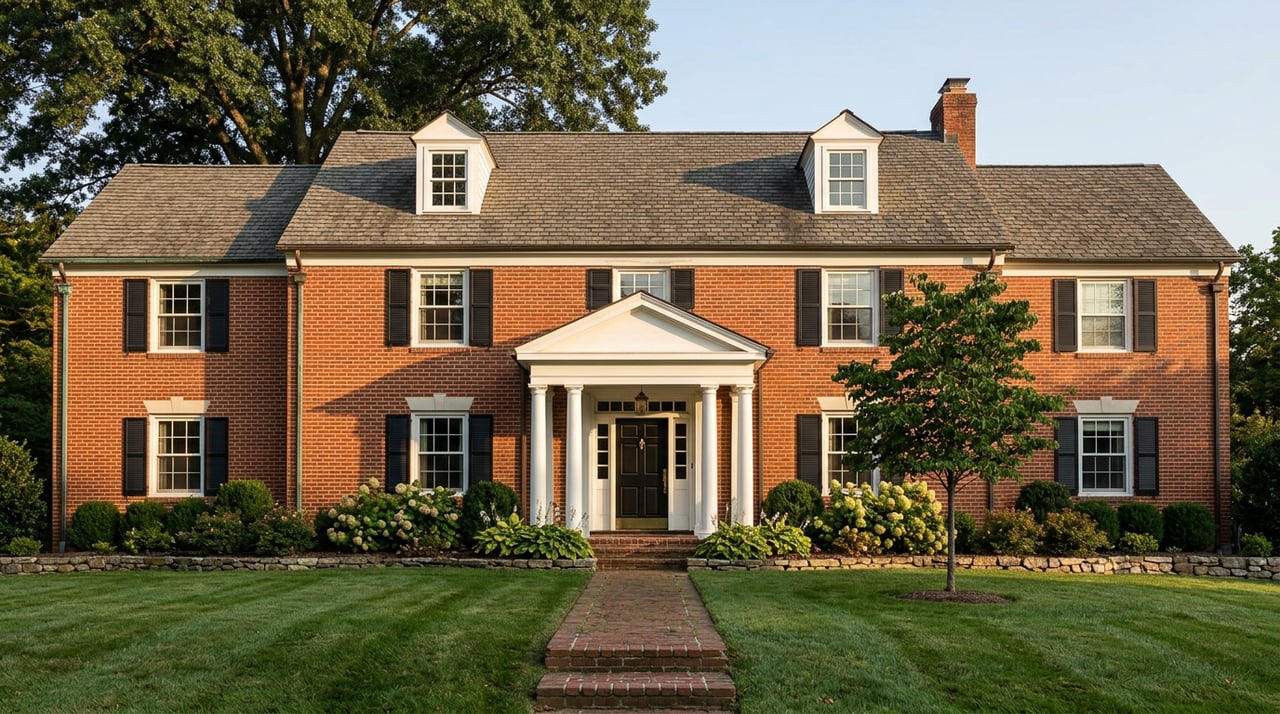
The Islington stop sits inside a village center that has kept its historic shape: older Colonials and Capes on established residential streets, an independent business cluster that includes local names like Muffin House and Neroli, and a walkable layout that predates the automobile-first design of most Route 1 corridor towns.
The Route 128 stop tells a different story. It sits inside University Station, a 2.1-million-square-foot mixed-use project built on what used to be industrial land at the junction of I-95 and Route 128. National Development, New England Development, and Eastern Real Estate developed the site together, and what stands there now includes Target, Wegmans, and Nordstrom Rack as anchor tenants, New England's first Life Time Athletic, restaurants including Del Frisco's Grille and Anthony's Coal Fired Pizza, office space occupied by tenants like General Dynamics and Meketa, a 150-key hotel, a 100-unit assisted living community, and several hundred apartment units built as part of the same master plan. The project draws shoppers from Dover, Milton, Needham, and Sharon, according to the developer's own description of its trade area, which tells you the retail and residential density here was built for a regional customer base, not just Westwood residents.
That is not a difference in home condition or lot size. It's two different real estate products sitting inside one town line, each shaped by a different train stop and a different decade of development.
What that split actually looks like in price
Westwood doesn't publish a separate median for Islington versus University Station. But the town's own breakdown by property type, last updated in February 2026, gets close enough to show the pattern clearly. Single-family homes across Westwood carried a median sale price of $790,000, the segment most closely tied to Islington's older housing stock and the town's other legacy single-family streets. Condos and co-ops, the segment concentrated at and around University Station, carried a median sale price of $522,000.
| Single-family stock (Islington and similar streets) | Condo and apartment stock (University Station corridor) | |
|---|---|---|
| Commuter rail access | Islington stop, Franklin Line | Route 128 stop, Franklin Line and Amtrak |
| Typical housing | Older Colonials and Capes | New-construction condos, luxury apartments |
| Town-wide median price (Feb. 2026) | $790,000 | $522,000 |
| Everyday character | Walkable village, independent shops | National retail, dining, and fitness in one development |
Those two numbers sit nearly $270,000 apart, inside the same town, on the same tax rolls, served by the same school district and the same town government. A buyer comparing "Westwood" to a neighboring town using the blended headline figure is comparing against a number that doesn't actually describe either of Westwood's real housing markets.
What this means if you're comparing towns
If you're weighing Westwood against Sharon, Walpole, or Norwood based on the median price a portal shows you, you're working with a number that averages a $790,000 single-family stock against a $522,000 condo stock and calls the result "Westwood." Neither buyer type gets an accurate read from that blend.
If you want the walkable, older-home version of Westwood, your search should center on Islington and streets like it, and your price expectations should track closer to that single-family figure, not the townwide average that a thin month of condo sales can drag down or a thin month of legacy-home sales can drag up. If you want new construction, structured amenities, and a short walk to Wegmans and a gym membership at Life Time Athletic, University Station and its surrounding condo stock is a different budget conversation entirely, and treating it as "Westwood-priced" the same way you'd price a Colonial near town center will lead to the wrong offer.
The quality-of-life differences track the same split. Islington's pace is set by a village center and older streets. The University Station side is set by a retail and hospitality development built for a regional customer base. Even Westwood's better-known quiet spaces, like the more than 1,000 acres of trails and conservation land at Hale Reservation, sit closer to one side of this divide than the other. None of that shows up in a single median price, and all of it matters more to daily life than the number that gets printed on a portal.
Common questions
Does Westwood really have two commuter rail stops? Yes. Both are on the MBTA's Franklin Line. The Islington stop serves the historic village center, and the Route 128 stop sits inside the University Station development and also carries Amtrak service, which is part of why that side of town attracted large-scale mixed-use construction instead of another wave of single-family streets.
Why do different real estate sites show such different median prices for the same month? Westwood sells very few homes in a typical month, often single digits. With a sample that small, the reported median is highly sensitive to which type of home happens to close, whether that's an older single-family home near Islington or a condo near University Station. Different sites also pull from different data windows, which compounds the swing.
Is University Station actually walkable to the train, or do you still need a car? The development was built adjacent to the Route 128 MBTA Commuter Rail and Amtrak station as a transit-oriented project, so the retail, dining, and much of the residential stock sit within walking distance of the platform. Islington's businesses are similarly clustered around its own stop, though the two areas are a drive apart from each other.
A median price is a starting point, not a search strategy, especially in a town built around two different real estate identities. If you're comparing Westwood to other Norfolk County towns and want to know which side of town actually fits your budget and your list of must-haves, Mayer Realty Group can walk through the real numbers behind the headline figure and help you search the neighborhood that matches what you're actually looking for. Start your search with a conversation, not a portal average.